
Year 5Science
Year 5 Science Common misconceptions: Materials Properties
Year 5 Science common misconceptions guide explores density and particle diagrams for materials.
Year 5Science
Year 5 Science common misconceptions guide explores density and particle diagrams for materials.
Subject: Science | Year: 5
Class/Set: ____________ Date: ____________
Scope: Students often struggle to distinguish between a material and an object, and to understand that properties are inherent to the material, not solely linked to an object's function. They may also confuse physical changes with chemical changes, or the state of matter with the material itself.
| Misconception (What they think) | The Truth (The Correction) | Pedagogical Fix (Activity/Analogy) |
|---|---|---|
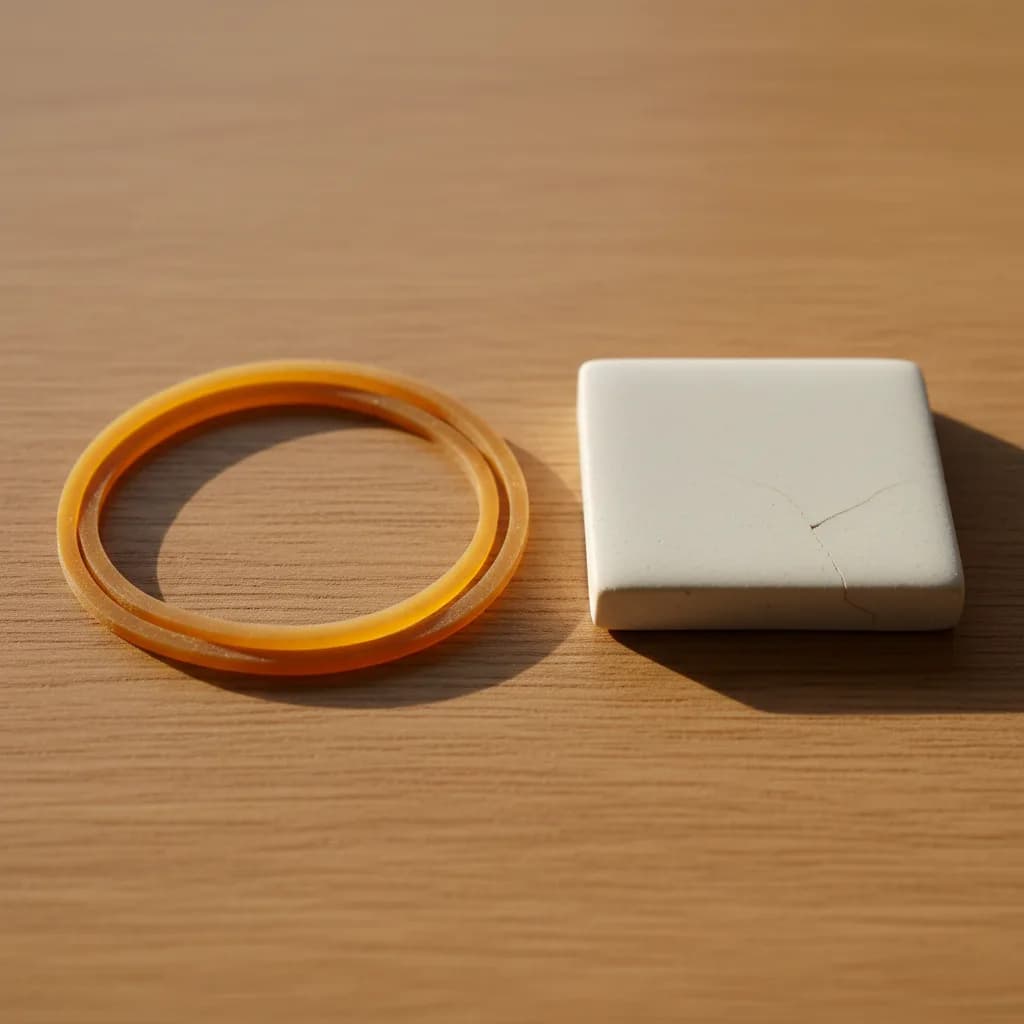
| All strong materials are hard, and all hard materials are strong. | Hardness is a material's resistance to scratching or indentation, whereas strength is its ability to withstand forces before breaking or deforming. These are distinct properties. | Demonstrate: Show a very hard material (e.g., a ceramic tile) which can shatter easily, and a strong, flexible material (e.g., a rubber band) that isn't hard. Explain: Ask students to identify objects that are hard but not strong, and strong but not hard. |
| Heavy objects always sink, and light objects always float. | Whether an object sinks or floats depends on its density (how much matter is packed into a given volume) compared to the density of the liquid it is in, not just its weight or size. | Experiment: Provide students with various objects (e.g., a small pebble, a large piece of wood, a metal key, a plastic bottle) and a tank of water. Ask them to predict and then test which objects float or sink, discussing their observations. |
| Materials always stay in one state (solid, liquid, or gas). | Most materials can change state if enough energy (often in the form of heat) is added or removed. These changes are typically reversible. | Investigate: Conduct an experiment carefully showing the three states of water (ice, liquid water, steam). Use a visual diagram or concept map to illustrate the processes of melting, freezing, evaporating, and condensing. |
| An object only has one important property (e.g., a sponge is only absorbent). | Materials possess multiple properties simultaneously. These diverse properties make them suitable (or unsuitable) for a range of different uses. | Compare and Contrast: Give students several similar objects made of different materials (e.g., a metal spoon, a wooden spoon, a plastic spoon). Ask them to list all the observable properties of each, then discuss how these properties influence their best use. |
| When something melts, it disappears or changes into a completely new material. | Melting is a physical change of state where a solid turns into a liquid. The material itself remains the same and can usually be solidified again (a reversible change). | Observe: Melt a small amount of chocolate or butter and then allow it to re-solidify. Explain: Emphasise that it is still chocolate or butter, just in a different state. Draw particle diagrams to show the change in particle arrangement. |
Effectively addressing entrenched student cognitive pitfalls requires targeted pedagogical intervention, moving beyond mere factual correction. This Misconceptions Guide facilitates this by offering precise strategies, such as the 'Experiment' for floating and sinking, which directly challenges the common misconceptions about density. Its structured layout, presenting the misconception, truth, and a pedagogical fix, exploits cognitive disequilibrium, prompting students to reconstruct their understanding. This teaching misconceptions guide acts as a robust error analysis guide. This approach ensures Year 5 pupils develop robust conceptual understanding in Science, fostering critical thinking skills essential for their developmental stage, rather than simply memorising isolated facts.
Join thousands of educators in England who are saving hours every week with MagiTeacher.
Try MagiTeacher for Free