
Year 5Science
Year 5 Science Quiz: Solubility
Year 5 Science quiz on 'soluble' substances and forming a 'solution' provides formative assessment.
Year 5Science
Year 5 Science quiz on 'soluble' substances and forming a 'solution' provides formative assessment.
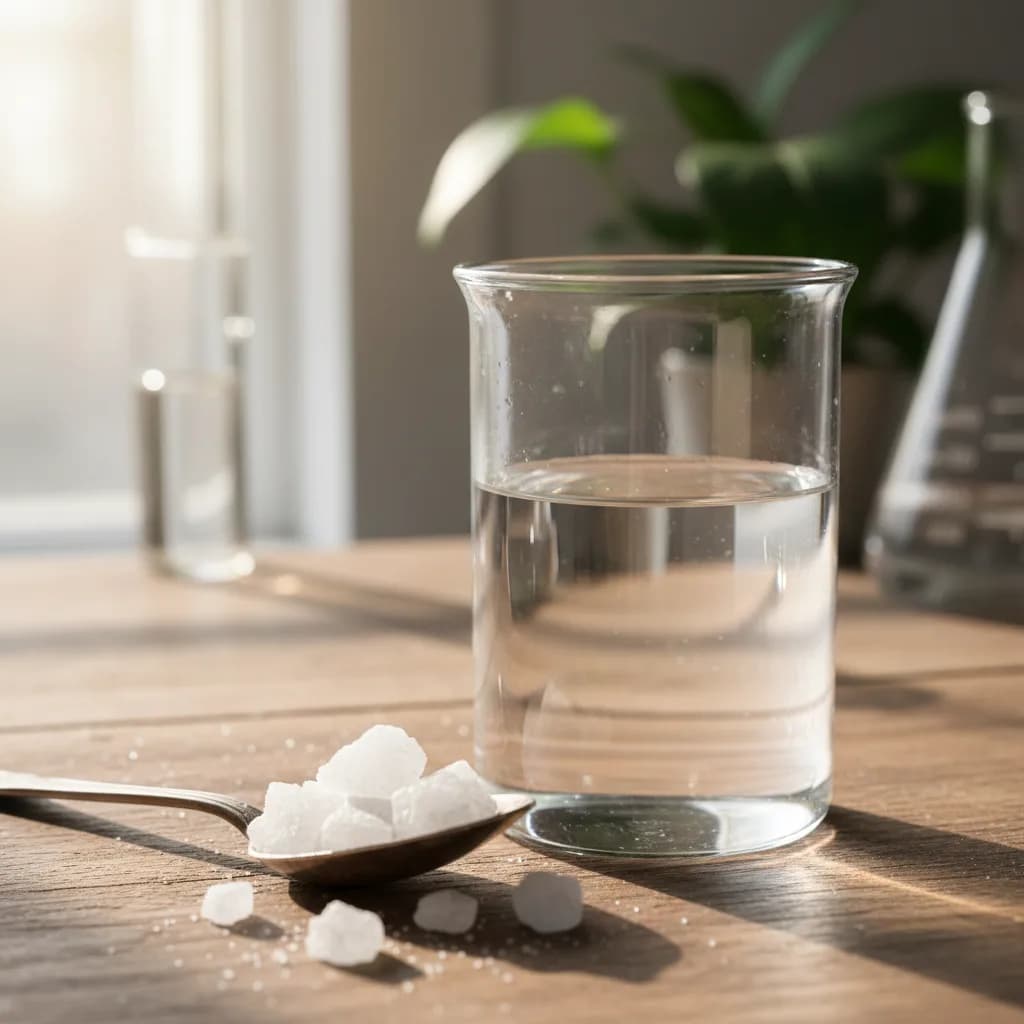
Subject: Science | Year: 5
Name: _________________________ Class/Set: ____________ Date: ____________
Q1: What does it mean if a substance is described as soluble? a) ☐ It can be melted easily with heat. b) ☐ It will float on top of a liquid without mixing. c) ☐ It will dissolve in a liquid to form a uniform mixture. d) ☐ It is very hard and cannot be broken apart.
Q2: When a soluble substance, like sugar, is mixed evenly into water, what is the resulting clear liquid called? a) ☐ A suspension b) ☐ A solution c) ☐ A precipitate d) ☐ A mixture of separate parts
Q3: Which of these everyday substances is typically insoluble in water? a) ☐ Table salt b) ☐ Sand c) ☐ Powdered drink mix d) ☐ Granulated sugar
Q4: When salt dissolves in a glass of water, what happens to the salt particles? a) ☐ They change into a gas and leave the water. b) ☐ They completely disappear and are no longer present. c) ☐ They break into tiny pieces and spread evenly throughout the water. d) ☐ They remain as visible solid grains at the bottom of the glass.
Q5: Which action would help a soluble substance dissolve faster in water? a) ☐ Making the water colder. b) ☐ Using larger chunks of the substance. c) ☐ Stirring the mixture vigorously. d) ☐ Leaving the mixture undisturbed.
Score: _______ / 5
Q1: c
Explanation: A soluble substance has the property of being able to dissolve in a liquid. When it dissolves, it forms a solution, which is a uniform mixture where the substance appears to have disappeared into the liquid. Option a) ☐ describes melting, which is a different physical change.
Q2: b
Explanation: When a soluble substance dissolves completely in a liquid, the resulting transparent mixture is called a solution. The particles of the soluble substance are so small and evenly spread that they cannot be seen separately. Option a) ☐ (suspension) would be if particles did not dissolve and might settle over time.
Q3: b
Explanation: Sand is an insoluble substance, meaning it does not dissolve in water. If you mix sand with water, the sand particles will eventually settle at the bottom. Salt, sugar, and powdered drink mix are all common examples of soluble substances.
Q4: c
Explanation: When salt dissolves, its particles do not vanish; instead, they break apart into very small pieces and spread out evenly throughout the water. This is why the water might taste salty, even though you can no longer see the salt grains. This understanding is key to grasping that dissolving is a physical change, not a disappearance.
Q5: c
Explanation: Stirring a mixture helps to increase the rate at which a soluble substance dissolves by helping the solid particles and liquid particles come into contact more frequently. Other factors that speed up dissolving include using warmer water and breaking the solid into smaller pieces (increasing surface area). Making the water colder or leaving it undisturbed would slow down the dissolving process.
Diagnosing precise conceptual misunderstandings in Solubility is often challenging for Year 5 educators. This Multiple Choice Quiz directly addresses this by employing carefully constructed distractors, such as option 'a) A suspension' in Q2, which specifically targets the common misconception between solutions and heterogeneous mixtures. The structured format reduces intrinsic cognitive load, allowing pupils to focus on discriminating between closely related scientific concepts rather than generating free-response answers. This architectural choice provides a low-stakes diagnostic tool, thereby enabling teachers to pinpoint exact learning gaps and refine instructional strategies crucial for Upper KS2 academic vocabulary development and multi-step scientific reasoning.
Join thousands of educators in England who are saving hours every week with MagiTeacher.
Try MagiTeacher for Free